


One should judge Nicolas Sarkozy according to his actions, and not according to his personality. Yet when his doings surprise even his own constituents, it is legitimate to take a detailed look at his biography and question the bonds that brought him to power. Thierry Meyssan has decided to write the truth about the French Republic’s president background. All the information included in this article is provable, except for two assertions signalled by the author who alone takes full responsibility.
Voltaire Network |
Almaty (Kazakhstan) |
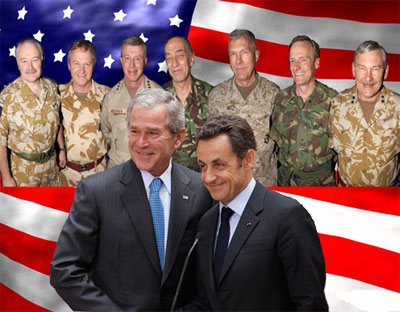
Tired of the overextended presidencies of François Mitterrand and Jacques Chirac, the French elected Nicolas Sarkozy counting on his energy to revitalize their country. They were hoping for a break with years of no-change and ideologies of the past. What they got instead was a break with the very principles which founded the French nation, and have been shocked by this “hyper-president”, seizing every day a new dossier, attracting towards him the right and the left wing, and tearing apart all points of reference to the point of creating a total confusion.
Like children who have just made a boo-boo, the French are too busy trying to find excuses for themselves to admit the magnitude of the damages and of their naiveté, and they refuse all the more to see who Nicolas Sarkozy really is, that they realize they should have known since a long time who he was.
One must say the man has talents. Like a magician he tricked them. By offering them the spectacle of his private life and posing in People’s magazines, he got them to forget his political history.
The aim of this article must be clearly understood. It is not to reproach to M. Sarkozy his family, his friends or his professional ties, but the fact of having hidden those ties from the French who believed, wrongly, they were electing a free man.
To understand how a man whom all agree today to view as an agent of the United States and of Israel was able to become the head of the Gaullist party and the president of the French Republic, we must go back in time, very very far back. We must make a long digression in the course of which we will present the protagonists who are today taking their revenge.
The family secrets
At the end of Second World War, the United States secret services relied on Italo-US godfather, Lucky Luciano, to control the security of American ports and prepare their disembarking in Sicily. The main contacts of Luciano — held at that time at a New York luxury prison — to the US intelligence services went notably through Frank Wisner, Sr. Later, when the “godfather” was liberated and chose to exile in Italy, they operated through his Corsican “Ambassador”, Étienne Léandri.
In 1958, worried about a possible victory of the FLN in Algeria which could open the way to Soviet influence in Northern Africa, the United States decided to provoke a military coup d’Etat in France. The operation was jointly organized by the Cia’s Direction of Planning – theoretically lead by Frank Wisner, Sr. – and by NATO. But Wisner had already become senile by that time and it was his successor, Allan Dulles, who supervised the coup. Out of Algeria, French generals organized a Public Salvation Committee which pressured the Parisian civilian authorities to vote full powers to General de Gaulle without having had to use force.
Yet, Charles de Gaulle was not the pawn the Anglo-Saxons had believed they could manipulate. In a first phase, he attempted to deal with the colonial contradiction by granting to the overseas territories a large autonomy within the French Union. But it was already too late to save the French empire; the colonized people didn’t believe any longer in the promises of the Metropolitan France and demanded their independence. After victorious but fierce repression against those fighting for independence, de Gaulle decided to face reality, and in a rare show of political wisdom, he granted independence to each colony.
This turn about was perceived by most of those who brought him to power as a betrayal. The CIA and NATO supported then all kinds of plots to eliminate him, among which a missed coup and some 40 attempts to murder him. However, certain of his followers approved of his political evolution. Around Charles Pasqua, they created the SAC (Civic action services), a militia to protect him.
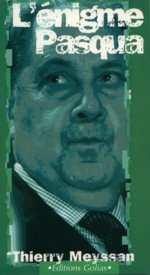
Pasqua was both a Corsican bandit and a former resistant. He married the daughter of a Canadian bootlegger who made fortune during the prohibition and he directed the Ricard company who, after commercialising absinthe, a forbidden alcohol, won respectability by converting to the sales of another alcohol based on liquorice (anisette). The company continued however to serve as a cover for all sorts of traffics connected to the New York Italian American family of the Genovese (and) that of Lucky Luciano. It is therefore not surprising that Pasqua called on Étienne Léandri (Ambassador of Luciano) to recruit the hands that constituted the Gaullist militia. A third man played an important role in the formation of the SAC, the former body guard of de Gaulle, Achille Peretti, also a Corsican.
Thus protected, de Gaulle designs an audacious national independence policy. Even though asserting his belonging to the Atlantic camp, he questions the Anglo-Saxon leadership. He opposes the entry of the United Kingdom into the European common market (1961 and 1967); refuses the deployment of UN helmets into Congo (1961); encourages the Latin American states to become free of US imperialism (speech of Mexico, 1964); kicks NATO out France and withdraws from the Atlantic Alliance’s integrated command (1966); he condemns Israeli expansionism during the Six Day war (1967); supports independence of Quebec (Speech of Montreal 1967), etc.
Simultaneously, de Gaulle consolidated the power of France by endowing it with a military industrial-complex including a nuclear deterrent and guarantying its energy provisions. He conveniently distanced the encumbering Corsicans of his entourage by entrusting them with foreign missions. Thus, Étienne Léandri became a leader of the ELF group (today Total), while Charles Pasqua the trusted man of the Francophone heads of State in Africa.
Conscious that he could not defy the Anglo-Saxons on all fronts at the same time, De Gaulle allied himself to the Rothschild family, choosing as Prime Minister, Georges Pompidou, who was the fondé de pouvoir of the bank. The two men constituted an efficient tandem, the political audacity of the first never losing sight of the economic realism of the second.
When De Gaulle resigned in 1969, Georges Pompidou succeeded him briefly at the Presidency before being taken out by a cancer. The historical Gaullists did not admit his leadership, however, and worried about his anglophile proclivities. They howled treason when Pompidou, supported by the General Secretary of the Élysée, Edouard Balladur, had “perfidious Albion” join the European Common Market.
The making of Nicolas Sarkozy
That decorum having been put into place, we can now return to our main character, Nicolas Sarkozy. Born in 1955 he is son to a Hungarian catholic nobleman, Pal Sarkösy of Nagy-Bosca, who sought refuge in France after fleeing the Red Army, and to Andree Mallah, a Jewish commoner from Thessalonica. After having three children (Guillaume, Nicolas and François), the couple divorced. Pal Sarkösy of Nagy-Bocsa remarried with an aristocrat, Christine de Ganay, with whom he had two children (Pierre Olivier and Caroline). Nicolas will not be raised by his own parents alone, but will go back and forth within this recomposed family.
His mother became the secretary of De Gaulle’s bodyguard, Achille Peretti. The latter, after founding the SAC, pursued a brilliant political career. He was elected Deputy and Mayor of Neuilly sur Seine, the richest residential suburb of the capital, and later President of the National Assembly.
Unfortunately, in 1972, Achille Peretti comes under grave accusations. In the United States, Time Magazine reveals the existence of a secret criminal organization « the Corsican Union » which controls a large part of the drug trade between Europe and America, the famous « French connection » which Hollywood popularized on the large screen. Based on parliamentary auditions and on his own investigations, Time names the name of a mafia boss, Jean Venturi, arrested a few years earlier in Canada, who is none other than Charles Pasqua’s commercial delegate at the liquor society Ricard. The names of several families headed by the “Corsican Union” are cited, among which that of the Peretti. Achille denies, but is forced to renounce to the presidency of the National Assembly, and barely escapes a “suicide”…
In 1977, Pal Sarkösy of Nagy-Bocsa separates from his second wife, Christine de Ganay, who then gets together with the N°2 of the US State Department central administration. She marries him and settles in America with him. The world being very small, as everyone knows, her husband is none other than Frank Wisner, Jr, son of the previous. Junior’s responsibilities at the CIA are unknown, but it is clear that he plays an important role. Nicolas, who remains close to his mother in law, his half brother and his half sister, begins to turn towards the United States where he “benefits” from training programs of the State Department.
During that same period, Nicolas Sarkozy adheres to the Gaullist party coming into frequent contact with Charles Pasqua, who was not only a national leader then, but also the head of the party’s Haut de Seine department section.
Having finished Law School in 1982 and joined the Barr association, Nicolas Sarkozy married the niece of Achille Peretti. His best man was Charles Pasqua. As a lawyer, Sarkozy defended the interests of his mentors Corsican friends. He bought a property on the Island of Beauty, in Vico, and went as far as envisaging to make his name more “Corsican” by replacing the “y” by an “i”: Sarkozi.
The next year, he was elected Mayor of Neuilly sur Seine in replacement of his uncle in law, Achille Peretti, thundered by a heart attack. However, it was not long before Nicolas Sarkozy betrayed his wife, and since 1984, he had a secret liaison with Cecilia, the wife of the most famous entertainer of French television at that time, Jacques Martin, whom he had met while celebrating their marriage, a function he exerted being mayor of Neuilly. That double life lasted five years, before the lovers decided to quit their respective couples in order to build a new home.
In 1992, Nicolas was best man in the marriage of Jacques Chirac’s daughter, Claude, with an editorialist of Le Figaro. He couldn’t refrain himself from seducing Claude and having a short liaison with her, while officially living with Cecilia. The cuckold husband committed suicide by absorbing drugs. The break was brutal and without pardon between the Chirac’s and Nicolas Sarkozy.
In 1993, the left lost the legislative elections. President François Mitterrand refused to resign and entered into cohabitation with a right wing Prime Minister. Jacques Chirac who ambitioned the presidency, and was thinking at that point of constituting, with Edouard Balladur, a couple comparable to that of De Gaulle and Pompidou, refused to be Prime minister and left his post to his “30 year long friend”, Edouard Balladur. In spite of his sulphurous past, Charles Pasqua became Interior Minister. While keeping high hand over Moroccan marijuana trade, he took advantage of his situation to legalize his other activities taking control of casinos, gambling and horse races in francophone Africa. He wove ties with Saudi Arabia and Israel and became an officer of honour to the Mossad. Nicolas Sarkozy on his part, became minister of Budget and spokesman for the government.
In Washington, Frank Wisner, Jr. became the successor of Paul Wolfowitz as head of the Political Planning department of the Department of Defense. Nobody noticed at that time the ties to the spokesman of the French government.
It is then that tensions similar to those which rocked the Gaullist party 30 years earlier, broke out between the historical Gaullists and the financial right wing, incarnated by Balladur. The new element was that Charles Pasqua and along with him, the young Nicolas Sarkozy, betray Jacques Chirac in order to join the Rothschild current. Mayhem breaks out. The conflict will reach a climax in 1995 when Edouard Balladur ran for president, against his former friend, Jacques Chirac, and was beaten. Foremost, following instructions from London and Washington, the Balladur government opened negotiations for membership status to the European Union and NATO to States of Central and Eastern Europe who had freed from Soviet control.
Havoc reigns then in the Gaullist party where the friends of yesterday are ready to kill themselves today. To be able to finance his electoral campaign, Edouard Balladur attempts to grab the secret slush fund of the Gaullist party, hidden in the double deckered accounting of the books of the oil group ELF.
The ride through the desert
Through out his first mandate, Jacques Chirac keeps Nicolas Sarkozy at arms distance. The man was discrete during his ride through the desert. Discretely, however, he continued to weave ties to the financial circles.
In 1996, finally succeeding to bring to conclusion an endless divorce procedure, Nicolas Sarkozy marries Cecilia. Two billionaires were their best men, Martin Bouygues and Bernard Arnaud (the richest man of the country).
The final act
Way before the Iraqi crisis, Frank Wisner Jr. and his colleagues at the CIA plan the destruction of the Gaullist current and the coming to power of Nicolas Sarkozy. They move in three phases: first, the elimination of the leadership of the Gaullist party and the take over of the party apparatus, then the elimination of his main right wing rival and the securing the nomination to the presidential election for the Gaullist party; finally, the elimination of any serious challenger on the left to make sure that Nicolas would win the presidential election.
During years, posthumous revelations by a real estate dealer kept the media on their toes. Before dying from a terminal disease, for reasons which remain unknown, he decided to video tape his confessions and for reasons which are even more obscure, the “cassette” landed in the hands of a Socialist party leader, Dominique Strauss Kahn, who addressed it indirectly to the media.
While the confessions of the real estate dealer did not lead to any juridical sanctions, they opened up the Pandora’s Box. The main victim of the series of scandals was Prime Minister Alain Juppé. To protect Chirac, he assumed alone all the penal sanctions. The removal of Juppé from the front lodges opened the way for the take by Sarkozy of the leadership of the Gaullist party.
Sarkozy exploited then his position to force Jacques Chirac to take him into the government once again, in spite of their reciprocal hatred. In the end, he became Interior Minister. Mistake ! This post gave him control over the prefects and the internal intelligence apparatus which he used to gain positions of power over the large administrations.
He dealt also with Corsican affairs. Prefect Claude Érignac was murdered. Even though nobody claimed it, the murder was immediately interpreted as a challenge by the independentists to the Republic. Following a long hunt, the police managed to arrest a fleeing suspect, Yvan Colonna, son of a Socialist deputy. Caring little about the presumption of innocence, Nicolas Sarkozy announced the arrest, accusing the suspect of being the assassin. The news is too important, a mere two days away from the referendum the minister has organized in Corsica to modify the status of the island. Be as it may, the electors reject the Sarkozy project, who, according to some, favoured mafia interests. While Yvan Colonna was ultimately declared guilty, he always claimed his innocence and no material proof was ever found against him. Strangely, the man preferred to remain totally silent rather than reveal what he actually knew. We reveal here that prefect Érignac was not directly killed by the nationalists, but by a paid killer, immediately exfiltrated towards Angola where he was hired to the security of the Elf group. The mobile of the crime was precisely connected to the previous functions of Érignac, responsible for the African networks at Pasqua’s cooperation ministry. As for Yvan Colonna, he is a personal friend of Nicolas Sarkozy since decades and their children have entertained social relations.
A new scandal broke out then: phoney computer listings were circulating falsely accusing several personalities of hiding bank accounts in Luxembourg, at Clearstream. Among the defamed personalities: Nicolas Sarkozy, who filed a suit insinuating that he suspected his right wing rival to the presidency, Dominique de Villepin, to have organized this machination. Sarkozy didn’t hide his intention either to throw him in jail. In reality, the false listings were put in circulation by members of the French American Foundation, of which John Negroponte was the president and Frank Wisner Jr, the administrator. What the judges ignored and which we reveal here is that the listings were fabricated in London by a common office of the CIA and of MI6, Hakluyt and co, of which Frank Wisner is also an administrator.
Villepin denied the accusations, but was indicted, assigned to residence and, de facto, eliminated from political life temporarily. The road is thus free on the right wing for Nicolas Sarkozy. It remained for the opposition candidacies to be neutralized. The membership fees to the Socialist party were reduced to a symbolic level in order to attract new activists. Suddenly, thousands of youth take membership cards. Among them, there were at least 10 000 new members who are in reality militants from the “Lambertist” Trotskyite party, (named after its founder Pierre Lambert). This small extreme left group historically served the CIA against the Stalinist communists during the cold war (it is the equivalent of the Social democrats/USA of Max Schatchman, who trained the US neo-conservatives). It is not the first time the “Lambertists” infiltrate the Socialist party. They introduced there two notorious CIA agents : Lionel Jospin (who became Prime minister) and Jean Christophe Cambadelis, the main advisor to Dominique Strauss Kahn.
Primaries were organized inside the Socialist party to designate its candidate to the presidential election. Two personalities were competing: Laurent Fabius and Ségolène Royal. Only the first was a danger for Sarkozy. Dominique Strauss Kahn came into the race with the mission to eliminate Fabius at the last moment. Something he did with the help of the votes of the infiltrated “lambertists”, who voted not for him but for Royal.
The operation is possible because Strauss Kahn is since long on the pay roll of the United States. Frenchmen ignore that he teaches at Stanford, where he was hired by the prévot Dean of the University, Condoleeza Rice. From the beginning of his term, Nicolas Sarkozy and Condoleeza Rice will thank Strauss Kahn by having him elected to the leadership of the International Monetary fund.
First days at the Élysée
The evening of the second round of the presidential election, when polling agencies announced his probable victory, Nicolas Sarkozy gave a short speech to the nation from his general campaign quarters. Then, contrary to all custom, he didn’t celebrate with the militants of his party, but went to the Fouquet’s. The famous brasserie at the Champs-Élysées, formerly the place of rendez-vous of the “Corsican union” is today the property of Casino magnate, Dominique Desseigne. It was lent to the elected president to receive his friends and main campaign donors. Some hundred guests crowded there, the richest men of France hobnobbing with the casino bosses.
The elected president then offered himself some days of well merited rest. Transported to Malta by a private Falcon 900, he relaxed on the Paloma, a 65 m yacht of his friend Vincent Bollore, a billionaire trained at the Rothschild bank.
Finally, Nicolas Sarkozy was inaugurated president of the French Republic. The first decree he signed was not to enact an amnesty, but to authorize the casinos of his friends Desseigne and Partouche to multiply the money machines.
He composed his working team and his government. Without surprise, one finds there an ominous casino owner (the minister of Youth and Sports) and the lobbyist of the casinos of his friend Desseigne (who became a spokesman of the “Gaullist party”.)
Nicolas Sarkozy relies above all on 4 men :
– Claude Guéant, secretary general of the Elysée Palace, the former right hand of Charles Pasqua.
– François Pérol, under-secretary general of the Elysée, an associate manager of the Rothschild bank.
– Jean-David Lévitte, diplomatic advisor. Son of the former director of the Jewish Agency. French ambassador to the UN, he was removed by Chirac who judged him too close to George Bush.
– Alain Bauer, the man of the shadows. His name does not appear in the directories. He is in charge of the secret services. Former Grand Master of the French Great Orient (the most important Masonic organization in France) and former N°2 of the United States National Security Agency in Europe.
Frank Wisner Jr. who in the meantime was named “special envoy” to President Bush for the independence of Kosovo, insisted that Bernard Kouchner be named minister of Foreign affairs with a double mission priority: the independence of Kosovo and the elimination of France’s Arab policy.
Kouchner started his career by participating in the creation of a humanitarian NGO. Thanks to financial support from the National Endowment for Democracy, he took part in operations of Zbigniew Brzezinski in Afghanistan against the soviets, along sides with Oussama Ben Laden and the Karzai brothers. One finds him again in the 90’s working with Alija Izetbegovic in Bosnia Herzegovina. From 1999 to 2001 he was high representatives of the UN to Kosovo.
Under the rule of the youngest brother of president Hamid Karzaï, Afghanistan became the first world producer of opium poppies transformed in heroin locally and transported by the US Air force to Camp Bondsteed (Kosovo). There, the men of Hacim Thaci take charge of the drug and distribute it mainly in Europe and accessorily in the United States. The benefits are used to finance the illegal operations of the CIA. Karzai and Thaci are longstanding personal friends of Bernard Kouchner who undoubtedly ignores their criminal activities in spite of all the international reports which have been dedicated to them.
To complete his government, Nicolas Sarkozy named Christine Lagarde, minister of the Economy and Finances. All her career was made in the United States where she directed the prestigious law firm Baker and McKenzie. At the Center for international and strategic studies of Dick Cheney, she copresided with Zbigniew Brzezinski a working group which supervised the privatisations in Poland. She organized also an intense lobbying effort for Lockheed Martin against French airplane producer Dassault.
New escapade during the summer. Nicolas, Cecilia, their common mistress and their children went on holidays to the United States at Wolfeboro, not far from the property of President Bush. The bill was paid this time by Robert F. Agostinelli, an Italian-New Yorker investment banker, Zionist and a pure brand of neo-conservative who writes in Commentary, the magazine of the American Jewish Committee.
The success of Nicolas had impact on his half brother, Pierre Olivier. Under the American name of Oliver, he was named by Frank Carlucci (formerly N°2 of the CIA after having been recruited by Frank Wisner, Sr.) Director of the new investment fund of the Carlyle Group (the common investment firm of the Bush family and Ben Laden). Having become the 5th largest business dealer in the world, he handles the main assets of the sovereign funds of Kuwait and Singapore.
The popularity of the President is in a free fall in the polls. One of his communications advisors, Jacques Seguela (also consultant for political communication at the NED where he is in charge of diverse CIA operations in Western Europe and Latin America), proposes to detract the public’s attention with new “people stories”. The announcement of the divorce with Cecilia was publicised by Libération, the paper of his friend Edouard de Rothschild, to cover up the slogans of demonstrators in a day of general strike. Stronger even, the communications agent organized a meeting between the president and the former top model, Carla Bruni. Some days later, her liaison with the president became official and the media hammering covered up once again political criticism. Some weeks later, the third marriage of Nicolas occurred. This time, he chose as best men Mathilde Agostinelle (the wife of Robert) and Nicolas Bazire, a former cabinet director of Edouard Balladur who became assistant manager at the Rothschilds.
When will the French use their eyes to see what they have to do ?
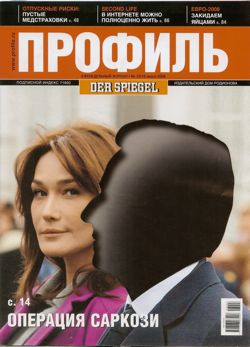
Profile; 16 juin 2008
The information contained in this article was presented by Thierry Meyssan during the final plenary session of the Eurasian Media Forum (Kazakhstan, April 25, 2008) dealing with “Glamour in politics and the politics of glamour”.
The large attention received by this speech lead the author to write this article for publication in Profile, currently the main Russian news magazine.
Several non-authorized versions and translations of this piece were circulated while the Voltaire Network’s website was down. Please consider this article as the only valid one.


 Articles by this author
 Send a message
France


France opposes Russian Korean-style peace project in Ukraine

RIA-Novosti publishes photo of French "mercenary" in Ukraine

Russian press issues list of 13 French “mercenaries” who died in Ukraine

Russian Duma to address French Parliament
continue


Stay In Touch
Follow us on social networks
Subscribe to weekly newsletter