Voltaire Network
Strategy

Washington and Tehran face to face

Washington and Tehran face to face

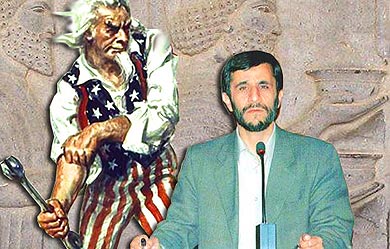
For the past five years, the neoconservatives have been preparing the invasion of Iran. The arguments they have used to justify their own ambition were refuted one after the other. But they’re still reluctant to give up their threats. Meanwhile, thanks to the support offered by the constituents, the Iranian political forces have been able to avoid a direct confrontation and have ensured that any military operation would turn out to be too costly for Washington, explains Thierry Meyssan.

Voltaire Network | Paris (France)
+
JPEG - 35.5 kb

When the Bush-Cheney team took power in Washington, it was determined to launch a military attack on Iran and take control of its energy resources. In a reference work of the Project for A New American Century, Present Dangers [1], it had already detailed its arguments to “sell” such war to those who finance the electoral campaign and, later, to the public opinion.

Five slogans were mentioned then:
- Iran supports international terrorism.
- Iran supports Islamic armies around the world.
- Iran rejects the peace process and the existence of Israel.
- Iran violates Human Rights, especially those of the baha’is and the Jews.
- Finally, Iran is trying to make the atomic bomb.

As you will see, three of the above slogans no longer work.
- In the melodramatic series of the American television, the producers sometimes decide to replace the actor who is playing certain character. An “off” voice then announces that the role of X will be played by Y. In the same way, Libya was accused for years of being the cause of all evils, till suddenly, and with no explanation, such responsibility was attributed to Iran, and later, to the invisible al-Qaeda. This was the way in which the attacks against the Khobar towers (in Saudi Arabia) were primarily explained, without leaving no room for doubt, to Iran. But later, by the end of 2001, it was said without the slightest explanation that al-Qaeda would then play the culprit’s role.
- The accusation that Iran secretly funded all radical Muslim movements around the world was discarded when they decided to attribute such a responsibility to the Saudi royal family and tried to overthrow the regent Abdallah. But such an accusation was forgotten when the objective was to divide and oppose the Sunnis and Shiah in Iraq.
- Finally, the accusation against Iran for violation of religious rights of baha’is and the Jews did not stand for a long time. In fact, while it is true that those peoples are actually being marginalized and rejected in Iran, it is also true that both of them practice their cult and enjoy political representation.
There is still the anti-Zionism and the nuclear threat.

President Bush, in his Speech of 2002 on the State of the Union, announced his military priorities to blame Iran, Iraq and North Korea for having made a nuclear agreement to destroy the United States. It is about the famous formula of the “Axis of Evil”, in which the references to the fascist Axis during the 30’s and the Empire of Evil of the Cold War are mixed.

Three years later, no one believed that those States had reached such an agreement. On one hand, because the regimes of Iran and Iraq had not re-established peace yet after a long and bloody war, and on the other hand, because there never was the slightest evidence about the existence of such a plot.

Washington no longer uses neither arguments nor analysis for justification, but its appetite has not been satisfied. Having already taken control of the Afghan circulation corridor and Iraqi oil reserves, the U.S. strategists are focusing on Iran. The preparatory propaganda campaign has been redirected, therefore, towards the nuclear issue, with a bit of understanding about some secret responsibility of Tehran in the failure of the Coalition in Iraq.

Based upon the principle that all current techniques are dual, that is, they could be used with civil or military purposes, the U.S. has accused Iran of working secretly to manufacture a nuclear bomb. Several clues, thoroughly studied by the experts of the International Atomic Energy Agency (IAEA), could have led to raise the question sometime, but it has now been shown that they were misinterpreted. It does not matter anyway. For Washington, the lack of evidence does not mean that Iran is innocent. Therefore, a preventive attack has to be launched against that country.

On the other hand, without worrying about the Eastern subtleties, the neoconservatives were able to impose a simple explanation about the Iranian public life. In their opinion, the paralysis of the country was an indication of contradictions between the people and the “Mullah regime”. The latter is being locally undermined by a binary opposition between the “conservatives”, described as fanatics and misogynists, and “progressives”, open to the West and modernity.

In order to take control of Iran, such opposition has to be strengthened, so that it would rely on the people’s frustrations, overthrow the bad guys and get the country at the side of Good. Through radio and TV transmissions, and by spending millions of dollars, Washington had no doubt of the results of the presidential elections in June 2005. The Ayatollah Rafsanyani, a smart politician, would be the winner, maybe without even going to a second round. The Western media would applaud this possibility, except the Israeli press that denounced a simple change of image.

However, as we have seen for years, this analysis is based on imaginary factors. The paralysis of the country was not because the people rejected the regime, but due to the presence of three forces in power, not two. The first one had its legitimacy in the Islamic revolution. It has a social image in terms of economy and severity regarding the habits (obviously it is about the conservatives). The second one is focused on the international business world, and obviously, brings about the easing of tensions with Washington (“the reformists”). The third force is made up of old combatants of the Iraq-Iran war and has a social and nationalist basis. The latter received a widespread support by the constituents to break the triangle. Regarding the nuclear issue, it is subjected to a national consensus, which has nothing to do with the above-mentioned trends.

Since the Supreme Leader of the Revolution condemned the atomic bomb as being incompatible with Islam long ago, it is not possible to imagine that major secret military programs would be developed in Iran. This does not prevent Tehran from letting the question be raised as its bellicose neighbor, Israel, does have the nuclear weapon. At present the economic development of the country involves the production of atomic energy and as the Iranians feel proud of themselves and their scientists, it is very unlikely that they give up their future.

The election of Mahmud Ahmadineyad as president of the Islamic Republic has been widely described as a “surprise” by the same people who were wrong. In view of the early hesitation of the Western media and the non-mobilization against Iran, Israel quickly embarked upon a press campaign against the winner of the elections. More providential than credible witnesses accused him of being involved in the holding of hostages at the U.S. embassy, the tortures against civilians and even the killing of a Kurdish dissident in Vienna. Later on, manipulative organizations such as the AIPAC described him as a pathological misogynist that the “tough guys” from government use as a puppet. A probe into the issue revealed that as a proof of his hatred against women, as the mayor of the capital city he had ordered the construction of a huge park where men were not allowed. After that, such a poor argument gave way to the outrageous term “Islamic-populist”. Le Figaro, for example, then accused the new Iranian president of having bought the constituents of the capital by developing social services in it.

However, in terms of propaganda, the fact that these arguments have been rejected one after the other for four years is irrelevant because they have been used successively, so that Iran always appears in the position of culprit. This is how the proverb goes “there is no smoke without fire”, and Tehran has to be blamed for something.

Meanwhile, the Iranian power did not remain idle. Instead, it has enhanced its relations with Russia, a country that supervises its civil nuclear industry and supplies strategic missiles, while the Iranian engineers build a port on the Russian Caspian Sea; it has established an economic alliance with China, so it does not fear possible economic sanctions by the United States; and finally, it moved its pawns in Iraq in such a way that it even controls a sector of the government established by the Coalition.

The main players are now waging a real speed race. Firstly, Dick Cheney’s cabinet entrusted General Ralph Ed. Eberhart to come up with plans for nuclear attacks against Iran. Secondly, the Pentagon lets the details of a global political-economic-military plan against Iran leaked to its allies. Thirdly, the MI6 and CIA financed the development of separatist groups based in London and the terrorist group of the Mujahedins of the People, based in Washington. The Iranians, for their part, have blocked all the channels so that an attack by the Coalition would bring about its own destruction due to the interruption of most of the oil supplies, which would be provoked by such an aggression. Of course, a war seems to be unlikely now, since it would be catastrophic for the attackers themselves; however arrogance has sometimes made empires test themselves on too strong preys.

[1] Present Dangers, Crisis and Opportunity in American Foreign and Defense Policy, a collective work done under the leadership of Robert Kagan and William Kristol (Encounter Books, 2000), its title referred to the Committee of Present Danger that revived in its times the spirit of the Cold War in the United States.

<span lang='fr'>Thierry Meyssan</span>

Thierry Meyssan French intellectual, founder and chairman of Voltaire Network and the Axis for Peace Conference. His columns specializing in international relations feature in daily newspapers and weekly magazines in Arabic, Spanish and Russian. His last two books published in English : 9/11 the Big Lie and Pentagate.

 
The GCC and NATO lose their leadership
DOUBLE VETO BANS IMPERIAL WAR AGAINST SYRIA
 
Covert Action
Although the principle of state sovereignty lies at the heart of international law, the super powers have not refrained from corrupting governments, destabilising societies, eliminating their leaders and even overthrowing regimes by means of covert action. While this form of interference is relatively inexpensive when weighed against the potential gains, it inevitably undermines trust among nations.
The Anglo-Saxons have become the masters of the game. As joint signatories to a 1948 secret military pact (UK-USA + Canada, Australia, New Zealand), they fashioned espionage and covert action tools to serve their common project: the Cold War. They were rivaling in this field against the Soviet Union, over which they had already attained undeniable superiority. Both Maoist China and post-colonial France also resorted to analogous means with a view to securing zones of interest, mainly in Africa.
The landscape changed completely after the demise of the USSR. China stopped financing armed revolutionary groups all around and concentrated on pragmatic intelligence efforts to sustain economic cooperation development. France withdrew from its private reserve in Africa to leave room for the European Union. Having outlived the Yeltsin abyss, Russian intelligence set about restructuring at the national level and in their historical area of influence (newly independent ex-Soviet states) by mobilizing against external intrusions rather than interfering in the affairs of other countries.
As of 1995, the Anglo-Saxons invested massively in their secret services, whose budget tripled over a 15-year period. In addition, they have drawn the Israeli services into their structure either as full members or as subcontractors. In 2009, the Anglo-Saxon services (except Israel) operate on an employment level of 250,000 men and a budget exceeding 100 billion dollars (i.e. 15 times higher than Russia’s, virtually their main competitor). In effect, espionage and covert action have become the essential tools of forced globalisation.
+

Article licensed under Creative Commons

The articles on Voltaire Network may be freely reproduced provided the source is cited, their integrity is respected and they are not used for commercial purposes (license CC BY-NC-ND).

Support Voltaire Network

You visit this website to seek quality analysis that enables you to forge your own understanding of today’s world. In order to continue our work, we need you to support our efforts.
Help us by making a contribution.

How to participate in Voltaire Network?

The members of our team are all volunteers.
- Authors : diplomats, economists, geographers, historians, journalists, military servicemen, philosophers, sociologists. You can send us your article proposals.
- Professional-level mother-tongue translators: you can help us by translating our articles.

International edition
français
English
Español
italiano
عربي
русский
Deutsch
 
99 <span lang='fr'>articles cette semaine dans toutes les langues</span>
Señal de Alerta
El “después”, “Dios proveerá” y dejadez arruinan al Perú
por Herbert Mujica Rojas, Socios, 14 de febrero de 2012
 
Qatar buys General al-Dhabi's resignation Qatar buys General al-Dhabi’s resignation
Voltaire Network, 14 February 2012
 
Many Americans gave up hope last year – 2012 will be worse Many Americans gave up hope last year – 2012 will be worse
by Joseph Stiglitz, Voltaire Network, 14 February 2012
 
La Gran Bretagna "riconfeziona" al-Qaida La Gran Bretagna "riconfeziona" al-Qaida
Rete Voltaire, 14 febbraio 2012
 
Endgame in the Middle East Endgame in the Middle East
by Thierry Meyssan, Voltaire Network, 14 February 2012
 
Sergej Lavrov accolto da eroe a Damasco Sergej Lavrov accolto da eroe a Damasco
Rete Voltaire, 14 febbraio 2012
 
Syria's Uprising in Context Syria’s Uprising in Context
by Stephen Gowans, Voltaire Network, 14 February 2012
 
US war games in South East Asia US war games in South East Asia
Voltaire Network, 14 February 2012
 
Francois Hollande negozia con l'emiro del Qatar Francois Hollande negozia con l’emiro del Qatar
Rete Voltaire, 14 febbraio 2012
 
Europei prime vittime di sanzioni contro l'Iran Europei prime vittime di sanzioni contro l’Iran
Rete Voltaire, 14 febbraio 2012
 
Syrien: Fünf Fragen an Thierry Meyssan Syrien: Fünf Fragen an Thierry Meyssan
Voltaire Netzwerk, 14. Februar 2012
 
Сирия сегодня Сирия сегодня
Борис ДОЛГОВ, Сеть Вольтер, 14 февраля 2012
 
Vidéo : 5 questions à Thierry Meyssan sur la Syrie Vidéo : 5 questions à Thierry Meyssan sur la Syrie
Réseau Voltaire, 14 février 2012
 
Das Ende der Partie im Nahen Osten Das Ende der Partie im Nahen Osten
von Thierry Meyssan, Voltaire Netzwerk, 14. Februar 2012
 
Se termina la partida en el Medio Oriente Se termina la partida en el Medio Oriente
por Thierry Meyssan, Red Voltaire, 14 de febrero de 2012
 
Fin de partie au Proche-Orient
En direct
Fin de partie au Proche-Orient
par Thierry Meyssan, Réseau Voltaire, 14 février 2012
 
Al-Qaida frappe à Alep
« Revue de presse Syrie » #50
Al-Qaida frappe à Alep
Partenaires, 13 février 2012
 
Páginas Libres
Con magia y mano negra Movistar repara y avería mi teléfono
por Guillermo Olivera Díaz, Socios, 13 de febrero de 2012
 
Le Qatar achète la démission du général al-Dabi Le Qatar achète la démission du général al-Dabi
Réseau Voltaire, 13 février 2012
 
2012, année de tous les périls ? 2012, année de tous les périls ?
par Joseph Stiglitz, Réseau Voltaire, 13 février 2012
 
Jeux de guerre états-uniens dans le Sud-Est asiatique Jeux de guerre états-uniens dans le Sud-Est asiatique
Réseau Voltaire, 13 février 2012
 
256. Petite leçon suisse d'instruction civique à l'intention de l'Europe
« Horizons et débats », 12e année, n° 6, 13 février 2012
Petite leçon suisse d’instruction civique à l’intention de l’Europe
Partenaires, 13 février 2012
 
مجلس التعاون الخليجي والناتو يفقدان زمام القيادة
الفيتو المزدوج لمنع حرب الإمبراطوريات على سوريا
مجلس التعاون الخليجي والناتو يفقدان زمام القيادة
بقلم ثييري ميسان, Shabakat Voltaire, 13 شباط (فبراير) 2012
 
الصين تصبح الشريك التجاري الأول لألمانيا الصين تصبح الشريك التجاري الأول لألمانيا
Shabakat Voltaire, 13 شباط (فبراير) 2012
 
Iran's Historic Anniversary Iran’s Historic Anniversary
by Stephen Lendman, Voltaire Network, 13 February 2012
 
Al-Qaeda strikes in Aleppo
« SYRIA PRESS REVIEW » #50
Al-Qaeda strikes in Aleppo
Partners, 13 February 2012
 
Páginas Libres
Mafia de complicidad y reacción en el Apra
por Jesús Guzmán Gallardo, Socios, 12 de febrero de 2012
 
Syria 2011-2012, a rematch of Israel's 2006 war on Lebanon Syria 2011-2012, a rematch of Israel’s 2006 war on Lebanon
by Mahdi Darius Nazemroaya, Voltaire Network, 12 February 2012
 
Páginas Libres
¿Se incrementa riesgo personal con este gobierno?
por Guillermo Olivera Díaz, Socios, 12 de febrero de 2012
 
Ante la competencia de la OCS, ¿escogerá la OTAN la diplomacia o las armas?
« Revista de prensa sobre Siria » #49
Ante la competencia de la OCS, ¿escogerá la OTAN la diplomacia o las armas?
Socios, 12 de febrero de 2012
 
Wladimir Putin tritt als Beschützer der Orient-Christen auf Wladimir Putin tritt als Beschützer der Orient-Christen auf
Voltaire Netzwerk, 12. Februar 2012
 
Großbritannien „verpackt“ die Al-Qaida neu Großbritannien „verpackt“ die Al-Qaida neu
Voltaire Netzwerk, 12. Februar 2012
 
Moscow and the formation of The New World System Moscow and the formation of The New World System
by Imad Fawzi Shueibi, Voltaire Network, 11 February 2012
 
Assassinats anonymes
« L’art de la guerre »
Assassinats anonymes
par Manlio Dinucci , Réseau Voltaire, 11 février 2012
 
Sergei Lavrov von Damaskus als Held empfangen Sergei Lavrov von Damaskus als Held empfangen
Voltaire Netzwerk, 11. Februar 2012
 
Al-Qaeda refashioned by the UK Al-Qaeda refashioned by the UK
Voltaire Network, 11 February 2012
 
الإرهاب في سورية
إغلاق السفارات والارهاب في حلب
بقلم مازن بلال, Partners, 11 شباط (فبراير) 2012
 
حلب تستفيق على الإرهاب...
وتصعيد دبلوماسي إعلامي وإرهابي
بقلم سورية الغد, Partners, 11 شباط (فبراير) 2012
 
الإرهاب في سورية
أغفو في وطني
بقلم نضال الخضري, Partners, 11 شباط (فبراير) 2012
 
الإرهاب في سورية
التحرك الخليجي إلى أين...
بقلم مازن بلال, Partners, 11 شباط (فبراير) 2012
 
Páginas Libres
¿Sófero retroceso post marcha por el agua?
por Guillermo Olivera Díaz, Socios, 11 de febrero de 2012
 
Face à la concurrence de l'OCS, l'OTAN choisira t-elle la diplomatie ou les armes ?
« Revue de presse Syrie » #49
Face à la concurrence de l’OCS, l’OTAN choisira t-elle la diplomatie ou les armes ?
Partenaires, 10 février 2012
 
 Im Wettstreit mit der SCO, wird die NATO Diplomatie oder Waffen wählen?
« Presseschau Syrien » #49
Im Wettstreit mit der SCO, wird die NATO Diplomatie oder Waffen wählen?
Partner, 10. Februar 2012
 
U.S. Prepares Georgia for New Wars in Caucasus and Iran
"NATO’s favorite despot"
U.S. Prepares Georgia for New Wars in Caucasus and Iran
by Rick Rozoff, Voltaire Network, 10 February 2012
 
La Grande-Bretagne « reconditionne » Al-Qaïda La Grande-Bretagne « reconditionne » Al-Qaïda
Réseau Voltaire, 10 février 2012
 
Faced with competition from the SCO, will NATO choose diplomacy or arms?
« SYRIA PRESS REVIEW » #49
Faced with competition from the SCO, will NATO choose diplomacy or arms?
Partners, 10 February 2012
 
Señal de Alerta
Risas inexplicables en la radio
por Herbert Mujica Rojas, Socios, 10 de febrero de 2012
 
Vladimir Putin emerges as protector of Eastern Christians Vladimir Putin emerges as protector of Eastern Christians
Voltaire Network, 9 February 2012
 
Censura británica: cómo seguir viendo Press TV Censura británica: cómo seguir viendo Press TV
Red Voltaire, 9 de febrero de 2012
 
El CCG y la OTAN pierden su liderazgo
El doble veto prohíbe la guerra imperial contra Siria
El CCG y la OTAN pierden su liderazgo
por Thierry Meyssan, Red Voltaire, 9 de febrero de 2012
 
Westerners looking for a "Plan B"
« SYRIA PRESS REVIEW » #48
Westerners looking for a "Plan B"
Partners, 9 February 2012
 
 Der Westen sucht den « B » Plan
« Presseschau Syrien » #48
Der Westen sucht den « B » Plan
Partner, 9. Februar 2012
 
Páginas Libres
¡Yo voto por el agua, el oro ni me va ni me viene!
por Guillermo Olivera Díaz, Socios, 9 de febrero de 2012
 
Les Occidentaux à la recherche d'un “Plan B”
« Revue de presse Syrie » #48
Les Occidentaux à la recherche d’un “Plan B”
Partenaires, 9 février 2012
 
Los occidentales buscan un “Plan B”
« Revista de prensa sobre Siria » #48
Los occidentales buscan un “Plan B”
Socios, 9 de febrero de 2012
 
Sergey Lavrov accueilli en héros à Damas Sergey Lavrov accueilli en héros à Damas
Réseau Voltaire, 8 février 2012
 
Russia's popularity in Syria confounds the West
« SYRIA PRESS REVIEW » #47
Russia’s popularity in Syria confounds the West
Partners, 8 February 2012
 
China becomes German's first trading partner China becomes German’s first trading partner
Voltaire Network, 8 February 2012
 
China wird erster Wirtschaftspartner von Deutschland China wird erster Wirtschaftspartner von Deutschland
Voltaire Netzwerk, 8. Februar 2012
 
Señal de Alerta
Etica bananera
por Herbert Mujica Rojas, Socios, 8 de febrero de 2012
 
Un avion cargo suspect saisi par la sécurité libanaise Un avion cargo suspect saisi par la sécurité libanaise
Réseau Voltaire, 8 février 2012
 
فرنسوا هولند يفاوض أمير قطر فرنسوا هولند يفاوض أمير قطر
Shabakat Voltaire, 8 شباط (فبراير) 2012
 
 الدبلوماسيات الغاضبة وسيناريوهات الحلول الدبلوماسيات الغاضبة وسيناريوهات الحلول
بقلم عيسى الأيوبي, Shabakat Voltaire, 8 شباط (فبراير) 2012
 
أبعد من انتصار نيويورك..اللعبة انتهت أبعد من انتصار نيويورك..اللعبة انتهت
بقلم عيسى الأيوبي, Shabakat Voltaire, 8 شباط (فبراير) 2012
 
جلسة الكذب المفتوح جلسة الكذب المفتوح
بقلم عيسى الأيوبي, Shabakat Voltaire, 8 شباط (فبراير) 2012
 
Egypt and Syria
Orient Tendencies
Egypt and Syria
by Wassim Raad, Partners, 8 February 2012
 
Les Occidentaux choqués par la popularité russe en Syrie
« Revue de presse Syrie » #47
Les Occidentaux choqués par la popularité russe en Syrie
Partenaires, 8 février 2012
 
كسر إرادات
عروبة ((الشاطئ)) الآخر
بقلم نضال الخضري, Partners, 8 شباط (فبراير) 2012
 
كسر إرادات
زيارة لافروف ... ودول الخليج تضغط
بقلم سورية الغد, Partners, 8 شباط (فبراير) 2012
 
كسر إرادات
مواقف في لحظات الترقب
بقلم سورية الغد, Partners, 8 شباط (فبراير) 2012
 
كسر إرادات
التكتيك الخليجي
بقلم مازن بلال, Partners, 8 شباط (فبراير) 2012
 
 Der Westen über die russische Beliebtheit in Syrien schockiert
« Presseschau Syrien » #47
Der Westen über die russische Beliebtheit in Syrien schockiert
Partner, 8. Februar 2012
 
Disgusto de los occidentales ante la popularidad rusa en Siria
« Revista de prensa sobre Siria » #47
Disgusto de los occidentales ante la popularidad rusa en Siria
Socios, 8 de febrero de 2012
 
Moscou et Pékin ont surtout voulu protéger Téhéran
« Revue de presse Syrie » #46
Moscou et Pékin ont surtout voulu protéger Téhéran
Partenaires, 7 février 2012
 
Páginas Libres
MOVADEF y SL: reflexiones estudiantiles
por Luis Alberto Pacheco Mandujano, Socios, 7 de febrero de 2012
 
Páginas Libres
Gran Marcha por el Agua: viernes 10, 2 pm
por Guillermo Olivera Díaz, Socios, 7 de febrero de 2012
 
Moscow and Beijing acted primarily to shield Tehran
« SYRIA PRESS REVIEW » #46
Moscow and Beijing acted primarily to shield Tehran
Partners, 7 February 2012
 
 Der GCC und die NATO verlieren ihre Vorherrschaft
Doppeltes Veto um den imperialen Krieg gegen Syrien zu verbieten
Der GCC und die NATO verlieren ihre Vorherrschaft
von Thierry Meyssan, Voltaire Netzwerk, 7. Februar 2012
 
Páginas Libres
¡Luz roja al solmáforo!
por Héctor Guillén Tamayo, Socios, 7 de febrero de 2012
 
Más que todo, Moscú y Pekín quisieron proteger a Teherán
« Revista de prensa sobre Siria » #46
Más que todo, Moscú y Pekín quisieron proteger a Teherán
Socios, 7 de febrero de 2012
 
 Moskau und Beijing wollten hauptsächlich Teheran schützen
« Presseschau Syrien » #46
Moskau und Beijing wollten hauptsächlich Teheran schützen
Partner, 7. Februar 2012