Themes
Low intensity warfare
416 articles
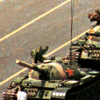
Vancouver (Canada) | 13 January 2013After decades of covert actions meant to overthrow the communist government of China, in 1989 the CIA launched the first of its so-called "colour" revolutions, which, being unsuccessful, did not achieve a designation of its own, those appellations coming later, in Eastern Europe and Georgia. This action took place in Beijing, where the CIA had trained a coterie of "students" to unseat the government.
Vancouver (Canada) | 7 January 2013In the first part of his study of the low-intensity warfare carried out by the United States against communist China since the Cold War, Robert S. Rodvik focuses on the U.S. collaboration with the nationalist government of Generalissimo Chiang Kai-shek. As a rabid anti-communist, Washington knew it could count on the Generalissimo to be more preoccupied with anti-Communist extermination campaigns than with resisting the Japanese invaders, and complicitly turned a blind eye to Chiang’s massacres and unbridled corruption.
18 October 2012In U.S. war films, the American soldier fighting in a strange land befriends a local child, creating a personal bond of humanity, while busily killing scores of the kid’s adult countrymen. American corporate media perform much the same sick exercise, identifying children among the “worthy victims” of the other side in U.S. foreign wars. Children deemed unworthy of American sympathy are left to the tender mercies of drones.
23 September 2012The United States has mastered the art of undermining its targets by fomenting domestic terrorism, and then laying the responsibility on them for the crimes sponsored by Washington itself. This method affords it the possibility both to justify military intervention and to carry it out without risk. The well-oiled scheme described here by Edward S. Herman is now being applied in Syria.
Detailed Investigation - Video Vesti24
The Houla Massacre: Opposition Terrorists "Killed Families Loyal to the Government"
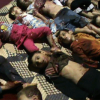
1 June 2012The massacre in Houla is being blamed on the Syrian government without a shred of evidence. Based on the comprehensive investigation into the events carried out by Russian news channel Vesti24, this incisive report confirms that crimes against humanity are being committed by terrorist militia. The objective is not only to isolate the al-Assad government politically and economically, but to develop a pretext and a justification for waging an R2P humanitarian war on Syria. The US Ambassador to the UN Susan Rice has hinted that, if necessary, the US and its allies may consider "taking actions outside of the Annan plan and the authority of the [UN Security] Council.” It is essential to reverse the tide of war propaganda which uses civilian deaths as a pretext to wage war, when those killings of civilians were carried out not by government forces but by professional terrorists operating under the helm of the US-NATO sponsored Free Syrian (...)
Havana (Cuba) | 29 May 2012The CIA is implementing a device to sabotage the Annan plan and any attempt at peace in Syria. Reverting to its Cold War methods when it created subversive groups in the Eastern Bloc to infiltrate international combat fronts, the CIA organized a joint training seminar in Miami for members of the Cuban and Syrian armed opposition.
27 May 2012Damascus has refuted accusations of being behind a ruthless attack in Houla where over 90 civilians were killed. Political analyst Ibrahim Alloush told RT that those killed were actually Assad loyalists, and the timing is suspicious.
Friday’s attack in the Governorate of Homs has risen already-high tensions in Syria, with many in the international community quick to point fingers at Assad’s forces.
Public anxiety was fueled by numerous amateur videos from Houla posted to YouTube showing (...)
26 May 2012Syria has been experiencing unrest since mid-March 2011. Many people, including security forces, have been killed in the turmoil.
While the West and the Syrian opposition accuse the government of the killings, Damascus blames ”outlaws, saboteurs and armed terrorist groups” for the unrest, insisting that it is being orchestrated from abroad.
Press TV has talked with author and historian Webster Griffin Tarpley to further discuss the issue.
The following is an approximate transcript of the (...)
15 May 2012The Russian Foreign Ministry on Monday urged international bodies operating in Kosovo to prevent the region from turning into a training ground for Syrian rebels.
A delegation from the Syrian opposition visited Kosovo in April to allegedly make a deal on exchanging experience in guerilla warfare against ruling authorities.
So far, the fractured Syrian opposition has been unable to form a steady front against the forces of President Bashar al-Assad.
The Russian ministry said in a (...)
13 May 2012Following their military defeat at the hands of the regular army, the legions of the anti-Syrian coalition have now turned to blind terrorism.
Thus, on Friday, Syrian special services foiled an attempted attack in Aleppo, the second largest city. A suicide bomber riding on a minibus loaded with 1.2 tons of explosives, meant to destroy the densely populated neighborhood of al-Shaar, was stopped by security forces before he could detonate the device
This follows the twin bomb explosions (...)
9 May 2012General Robert Mood, head of the UN observers mission in Syria (UNSMIS) created by Resolution 2043 of 21 April 2012, has issued several statements stressing that the return to peace and the implementation of the Annan plan call for sustained efforts by both parties, government and armed opposition.
In each of his statements, he attested to the cooperation of the Syrian forces and refrained from any comment regarding the cooperation or lack thereof of the armed opposition.
Here is the (...)
Rome (Italy) | 25 February 2012Although political assassination abroad constitutes an act of war, the United States has been making a daily practice of it. An independent military command structure, with an annual budget of 8 billion dollars, is capable of assassinating anyone, anywhere in the world within 48 hours after a presidential order. During 2011, it operated in 75 countries around the world unbeknownst to the public.
17 February 2012Sheikh Mohammed Ahmad Sadeq, Imam of the Anas Bin Malek mosque in the al-Midane neighborhood of Damascus, was shot dead by an armed terrorist group on Thursday, February 16.
In a recent sermon, the Sunni cleric condemned calls by the opposition to sabotage Syria.
He had urged the Ulama of Damascus to sit around the same table to issue a statement appealing for an end violence, regardless of the source.
Sheikh Sadeq, who held a doctorate in Islamic law, was married and had four children, (...)
7 February 2012In a statement issued during the eleventh summit of the organization, the nine members of the ALBA bloc (Bolivarian Alliance for the Peoples of Our America) rejected on Sunday the "systematic policy of interference and destabilization" that seeks to "impose by force on the Syrian people a regime change."
The ALBA resolution condemns the "acts of armed violence that paramilitary groups supported by foreign powers have unleashed against the Syrian people."
The heads of States members of the (...)
Moscow (Russia) | 30 January 2012In this article Boris Dolgov, a member of the Russian Academy of Sciences and the Institute of Oriental Studies in Moscow, reports on his recent trip to Syria. His field investigation is particularly valuable since most of the information about Syria in recent months has emanated from Beirut, Paris or London. Professor Dolgov confirms that, far from a contrived "Arab Spring" scenario, Syria is undeniably grappling with the threat of foreign occupation. He observes that while the offensive is inordinately violent, the population will not be intimidated. Aware of the disaster wrought by NATO "humanitarian" operations in Yugoslavia and Libya, the Syrians refuse to be drawn into a sectarian ambush. A process of reform and development is on track, but it will not be dictated from abroad. In Syria, one may object to the president, but not to national (...)
16 January 2012If further proof were needed that Syria is not in the grips of a widespread revolt, but of a continuing string of attacks aimed to terrorize the population and fuel resentment toward a government which has proven to be too popular, the recent acts of sabotage of public facilities no longer leave little doubt.
In the province of Idleb, a handcrafted explosive device planted along the roadside killed six workers of a textile factory and wounded 16 others who were on a minibus headed to their (...)
12 January 2012In the race to the primary elections, the seven candidates vying for the Republican nomination have engaged in a neoconservative bidding war on foreign policy issues.
Mitt Romney, second in the polls and considered one of the more moderate candidates, called for "covert actions within Syriam, to get regime change there."
Rick Santorum, former senator from Pennsylvania, considered that Washington was behind the recent explosion of an Iranian missiles deposit and pledged to continue along (...)
7 January 2012Syria, the heart of the Middle East, in both a geostrategic and nationalist context. It shares borders with Iraq, Lebanon (where it has bases), Israel, Turkey and Iran, with which last country it has a strong alliance, recently confirmed by Iranian President Ahmadinejad in the context of the current heightened European and U.S. aggression against Syria, when he stated that Iran will not permit any foreign injustice there.
Syria has always been a staunch defender of Palestine, with more (...)
Damascus (Syria) | 19 December 2011In the wake of the "Arab Spring" and NATO interventions, both official and secret, Qatar seeks to impose Islamist leaders wherever possible. This strategy has led it not only to fund the Muslim Brotherhood and to hand Al-Jazeera over to them, but also to support Al Qaeda mercenaries, who will henceforth oversee the Free Syrian Army. However, this new scenario raises serious concerns in Israel and among the supporters of the "clash of civilizations."
Havana (Cuba) | 7 January 2011In a Reflection published on August 25, 2010 under the title of “The Opinion of an Expert”, I mentioned a really unusual activity of the United States and its allies which, in my opinion, underlines the risk of a nuclear conflict with Iran. I was referring to a long article by the well-known journalist Jeffrey Goldberg, published in the US journal The Atlantic in September of that year, entitled “The Point of No Return”.
6 January 2011U.S. Defense Secretary Robert Gates is about to name Michael A. Sheehan as deputy to oversee special operations, low-intensity conflict and interdependent capabilities.
Colonel Sheehan has a long track record of targeted killings. He rose to fame serving with the U.S. Army in Panama and El Salvador, and later as a UN blue helmet in Somalia and Haiti. Back to civilian life, he was appointed roving counterterrorism ambassador, followed by a senior peacekeeping role at the U.N.
A (...)
6 June 2010Far from having broken with the practice of extrajudicial executions (also known as "targeted killings") which the Bush administration had made ample use of, the Obama administration has turned it into a priority tool of intervention.
According to the Washington Post, the White House has set aside $ 9.8 billion for Special Operations in 2011 (6.3 billion funded from the general budget and 3.5 billion off costs) .
Under the authority of Admiral Eric T. Olson, secret interventions have (...)
Kyrgyzstan’s ‘Roza Revolution’ - Cui Bono: (Part 4)
Washington and the Kyrgyz future—Securing the Pivotby
F. William Engdahl
Frankfurt (Germany) | 2 June 2010In this fourth and final part, F. William Engdhal explains why the stakes for Washington in the Kyrgyzstan events are of vital geopolitical importance. Central Asia is key for Washington’s strategy of global dominance, hinging on the militarization of the entire region. To this end, time-tested tactics of Low Intensity Warfare are generating the pretext for NATO’s permanent expansion under the guise of the ‘war on terror’, with opium gainfully fueling the operations. In Central Asia, as Engdhal suggests, the survival of the U.S. empire hangs in the balance.
#4 News Story selected by Project Censored in 2009
Is the US Restarting Dirty Wars in Latin America? by
Benjamin Dangl, Wes Enzinna
22 April 2010A resurgence of US-backed militarism threatens peace and democracy in Latin America. By 2005, US military aid to Latin America had increased by thirty-four times the amount spent in 2000. In a marked shift in US military strategy, secretive training of Latin American military and police personnel that used to just take place at the notorious School of the Americas, in Fort Benning, Georgia—including torture and execution techniques—is now decentralized in Budapest, Hungary; Bangkok, Thailand; Gaborone, Botswana; and Roswell, New Mexico.
Washington D.C. (USA) | 15 December 2009As he made clear in his West Point speech, President Obama is poised to use the escalation of the Afghan War as an excuse to further escalate the Pakistan War as well. Since taking office he has dramatically increased the number and severity of the drone strikes against northern Pakistan and is being pressed to expand the strikes into Baluchistan. According to Webster G. Tarpley, the most immediate goal of Obama’s Great Game strategy in this region is the dismemberment of both Afghanistan and Pakistan by fomenting a secessionist uprising among the ethnic groups on both sides of the border.
3 December 2009In the wake of President Obama’s announcement that he will send an additional contingent of troops to Afghanistan, a Pakistani Army officer who does not dispute the political justification of the U.S. "mission" in Afghanistan, does however point out that it is a military absurdity. As it has been defined, the mission is doomed to fail and the reported mid-term withdrawal is nothing but a ploy.
13 September 2009Pakistani General Hamid Gul in a 2004 interview to ’India Abroad’, the largest circulated newspaper for the Indian-American community.
A former Pakistani intelligence chief asserts that the ultimate goal of the United States in Pakistan is cutting out a ’favorable state’ out of parts of Iran and Pakistan to run its regional operations.
In a Sunday interview with Press TV, former head of Pakistan’s Inter-Services Intelligence (ISI), Hamid Gul said the US growing and suspicious presence in (...)
9 August 2009Eva Golinger presenting her book: El Código Chávez
The Venezuelan-American researcher Eva Golinger said that several US agencies are investing on the destabilization of the Cuban Revolution through two types of operations.
The analyst explained that these actions are undertaken through the US Agency for International Development (USAID) and the National Endowment for Democracy (NED).
Golinger, who has devoted herself for many years to studying US harassment against Cuba, said that the (...)
5 August 2009While Barack Obama was enchanting his Latin American listeners at the Fifth Summit of the Americas in Trinidad earlier this year, with promises of "equal partnership" and "mutual respect", plans to establish a base in South America that could be used "as a location from which mobility operations could be executed” were already in full swing. Recent developments in Honduras and, now, in Colombia have exposed Obama’s deceptive rhetoric, making it clear that Latin America is still regarded by Washington as its "own backyard" and that this president, too, is determined to keep it that way, albeit under a smoother veneer.
29 June 2009On July 28, troops in Honduras ousted President Manuel Zelaya and flew him out of the country. Praised by the traditional left for his economic policies and social reforms, Zelaya’s alliance with Hugo Chavez and growing relationship with the ALBA countries were sharply rebuked by the more conservative sectors which also disapproved of his periodic attacks on the United States. From Costa Rica, Zelaya declared: "This was a plot by a very voracious elite, which wants to keep this country in an extreme level of poverty!". However, it seems improbable that the Honduran elite would have toppled the democratically-elected president without Washington’s prior consent and support, despite assurances to the contrary.
1
|
2
Most popular

Detailed Investigation - Video Vesti24

Kyrgyzstan’s ‘Roza Revolution’ - Cui Bono: (Part 4)