


Daniele Ganser, professor of contemporary history at Bale University (Switzerland) and chairman of the ASPO - Switzerland, published a landmark book about "NATO’s Secret Armies." According to him, during the last 50 years the United States have organized bombings in Western Europe that they have falsely attributed to the left and the extreme left with the purpose of discrediting them in the eyes of their voters. This strategy is still present today, inspiring fear for the Islam and justifying wars on oil.
Voltaire Network |
Zurich (Switzerland) |
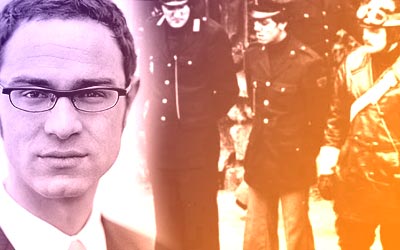
Daniele Ganser
Silvia Cattori: Your book about NATO’s Secret Armies [1] explains that the strategy of tension [2] and the False Flag terrorism [3] imply great dangers. It teaches us how NATO - together with the intelligence services or the West European countries and the Pentagon - utilised secret armies during the Cold War, hired spies among the extreme right wing, and organized terrorist acts for which they blamed the left. Becoming aware of this, we can wonder about what is likely to happen today behind our back.
Daniele Ganser: It is extremely important to understand what the strategy of tension truly represents the way it works nowadays. This can help us clarify the present and to see more clearly to what extent it is still in action. Only a few people know what the expression ’strategy of tension’ means. It is very important to talk about it, to explain it. It is a tactic that involves carrying out criminal acts and attributing them to someone else. By the term ’tension’, we mean emotional tension, all that which creates a feeling of tension.
By ’strategy’ we make reference to that which increases people’s fear in regard to a determined group. These secret structures of NATO had been equipped, financed and trained by the CIA, in coordination with the M16 (the British secret service), to fight against the Army of the Soviet Union in a case of war, but also according to the information to which he have access today, to commit terrorist acts in several countries [4]. That is how, since the 70s, the Italian secret services have been using these armies to foment terrorist attacks, with the purpose of causing fear among the population, and later, to accuse the communists of being the authors. The strategy of tension was designed to serve the purpose or discrediting, weakening and stopping communism from reaching executive power.
Silvia Cattori: To learn what it means is one thing. But it is still difficult to believe that our government could have let NATO, the West European intelligence agencies and the CIA act in such a way that could threaten their own citizens’ security!
Daniele Ganser: NATO was at the core of this clandestine network linked to terror; the Clandestine Planning Committee (CPC) and the Allied Clandestine Committee (ACC) were two substructures of the Atlantic Alliance, and they are clearly identified today. But, now that this has been established, it is still hard to know who was doing what. There are not any documents proving who was at the head, who organized the strategy of tension, how NATO, the West European intelligence services, the CIA, M16, and the hired terrorists among the extreme right, distributed each other’s roles. The only certainty that we have is that there was, inside these clandestine structures, some elements that used the strategy of tension. The terrorists from the extreme right have explained in their statements that it was NATO’s secret services that had supported them in this clandestine war. But when we ask for explanations from some members of the CIA or NATO - which I have done for many years - they limit themselves to say that it could be possible that a few criminal elements might have managed to avoid control.
Silvia Cattori: Were these secret armies active in every Western European country?
Daniele Ganser: In my research, I put forward evidence that these secret armies not only existed in Italy, but also in all Western Europe: in France, Belgium, The Netherlands, Norway, Denmark, Sweden, Finland, Turkey, Spain, Portugal, Austria, Switzerland, Greece, Luxembourg and Germany. In the beginning, we thought that there existed only one guerrilla-structured organization, and therefore, that all these secret armies had participated in the strategy of tension, and therefore, in terrorist acts. However, it is important to know that not all these secret armies have been involved in attacks, and to understand what differentiated them.
What appears to be clear today, is that NATO’s clandestine structures, usually called ’Stay Behind groups’ [5], were created in the beginning to act as a guerrilla in case of an occupation of Western Europe by the Soviet Union. The United States stated that the guerrilla networks were necessary to overcome the lack of preparedness of the countries attacked by Germany.
Several of the countries that were occupied by the Germans, like Norway, wanted to learn the lessons of their incapacity to resist the occupier, and they said to themselves that, in case of a new occupation, they had to be better prepared, to have another option at hand and to count with a secret army in case that the official one were to be defeated. Inside these secret armies, there were honest people, sincere patriots, who only wanted to defend their countries from an occupation.
Silvia Cattori: If I understand well, these Stay Behind groups, whose original goal was to be prepared in case of a Soviet invasion, have been deviated from that goal and were reorganised to defeat the left. From that, it is difficult to understand why the left parties have not investigated this or denounced this earlier.
Daniele Ganser: When we take the case of Italy, it appears that, every time that the communist party has interviewed the government to find an explanation about the secret army that was operating in this country under the coded name of Gladio [6], there was never any answer, under the pretext that it was a ’state secret’. It wasn’t until 1990 that Giulio Andreotti [7] recognised the existence of Gladio and its direct links with NATO, the CIA, and M16 [8]. _ It is also during that time that the judge Felice Casson was able to prove that the true author of the bombing in Peteano in 1972, that had shocked Italy, and that had been attributed up to that moment to the extreme left militants, was Vincenzo Vinciguerra, linked to ’Ordine Nuovo’, a group of the extreme right wing. Vinciguerra avoided blame for the bombing in Peteano with the help of the Italian secret services. Vinciguerra also spoke about the existence of this secret army, Gladio. He explained that, during the Cold War, these clandestine acts had caused the death of women and children [9]. He stated as well that this secret army controlled by NATO, had branches all around Europe. When this information was released, there was a political crisis in Italy. And it is thanks to the investigations of the judge Felice Casson that we got to know about NATO’s secret armies.
In Germany, when in 1990 the SPDs (German Social Democrat Partisans) became aware that in their country - as well as in all the other European countries - there was a secret army, and that this structure was linked to the German secret services, they loudly denounced it as a scandal and accused the Christian democratic Party (CDU). This party reacted by saying: "If you accuse us, we are going to say that, you too, together with Willy Brandt, you have been involved in this conspiracy". This happened at the same time as the first elections of the reunified Germany, which the SPD hoped to win. The leaders of the SPD understood that that was not a good electoral subject; in the end, the story was twisted in such a way as to make the existence of these secret armies seem justified.
In the European Parliament, in November 1990, many members exclaimed that the existence of such clandestine armies could not be tolerated and that the European people needed to know the true origin of terrorist acts and that an inquiry was needed. Therefore, the European Parliament wrote a complaint to NATO and to president George Bush Senior. But nothing was done.
It is only in Italy, Belgium and Switzerland that there have been public queries. And they are the only three countries that have set some order in this subject, and that have published a report about their secret armies.
Silvia Cattori: What about today ? Are these secret armies still active? Is it possible that there exist secret national structures which escape the control of each State?
Daniele Ganser: For a historian, it is difficult to answer that question. We haven’t got an official report of each country. In my books, I analyse some facts that I can prove.
Concerning Italy, there is a report stating that the secret army Gladio has been destroyed. About the existence of the secret army P26 in Switzerland, a report was also issued by the Parliament, in November 1990. Therefore, these clandestine armies, which had stocked explosives in hidden places everywhere in Switzerland, have been dissolved.
But in the other countries, nothing was done. In France, while president François Mitterrand stated that all that belonged to the past, we discovered later that these secret structures had always been present when Giulio Andreotti suggested that the French president was lying: "You say that the secret armies do not exist anymore; but, during 1990’s secret meeting in the autumn, you, the French, were also present; don’t say that this doesn’t exist anymore." Mitterrand became quite angry with this Andreotti because, after this revelation, he was forced to rectify his statement. Later, the head of the French secret services, admiral Pierre Lacoste, confirmed that these secret armies existed in France as well, and that France had also been involved in terrorist attacks. [10].
It is therefore difficult to say whether all this has been solved or not. And, even if the Gladio structures have been dissolved, new armies might have been created, still utilizing this technique of the strategy of tension and the False flags.
Silvia Cattori: Can we speculate that, after the fall of the USSR, the United States and NATO have continued developing the strategy of tension and of the false flags in other fronts?
Daniele Ganser: My research is based in the period of the Cold War in Europe. But it is known that there have also been false flags in other places, where the States’ responsibility was proved. For example: the Iran bombings in 1953, for which the communist Iranians were blamed at first. So it happened that the CIA and the Mi6 had used some agents provocateurs to orchestrate the overthrow of Mohammed Mossadegh’s administration, within the framework of the war, to control the oil.
Another example: the bombings in Egypt, in 1954, for which the Muslims were accused first. It was proved later that, in what was called the Lavon affair [11], it was the agents of Mossad who had been the perpetrators. This time, it was for Israel to stop the British troops from leaving Egypt, to make them stay there, and also to ensure the protection of Israel. Therefore, we have examples in history showing that the strategy of tension and the false flags have been used by the US, Great Britain and Israel. Given that throughout their history other countries have also used the same strategy, the research must continue in these fields.
Silvia Cattori: These clandestine structures of NATO, created after the Second World War, to supply the European countries with a guerrilla capable of resisting the Soviet invasion, ended up serving nothing but to build criminal operations against the European Citizens? Everything leads to the thought that the United States have another purpose!
Daniele Ganser: You are right in raising this question. The United States were interested in the political control. This political control is an essential element of Washington and London’s strategy. General Geraldo Serravalle, at the head of Gladio, the Italian network Stay-behind, gives an example of this in his book. He tells us that he understood that the United States were not interested in the preparation of the guerrillas against an eventual Soviet invasion, when he saw that, what interested the CIA agents who went to the training exercises of the secret army that he was leading, was to make sure that the army worked, could control the communist militants. Their fear was that the communists took the power in countries such a Greece, Italy and France. Therefore, the strategy of tension was meant to serve that purpose: to orient and influence the politics of certain countries of Western Europe.
Silvia Cattori: You have talked about an important emotional factor in the strategy of tension. Therefore, the terror, whose origin is vague, uncertain, the fear that it causes, all that helps to manipulate the public opinion. Are we not assisting today to the same kind of procedure? Yesterday, we fuelled the fear of communism, today aren’t we fuelling the fear of Islam?
Daniele Ganser: Yes, there is a very clear parallel. During the planning of the war in Iraq, it was said that Saddam Hussein had biological weapons in his possession, that there was a link between Iraq and the Al-Qaeda terrorists. But none of that turned out to be true. By means of these lies, it was intended to make people believe that Muslims wanted to spread terrorism all around, and that this war was necessary to fight against terror. However, the true reason for this war is the control of energy resources. This is due to the fact that the geology, the richness in gas and oil, are concentrated in the Muslim countries. He who wants to monopolize them, must hide behind this type of manipulations.
We cannot say that there is not a lot of oil left because the global production - the ’peak oil’ [12] - is going to arrive probably before 2020, and that therefore oil must be taken from Iraq, because people would say that children must not be killed to obtain oil. And they are right. They can’t be told, either, that in the Caspian Sea there are huge reserves and that there is a plan to create a pipeline that would go to the Indian Ocean but, given that it’s is not allowed to go through the South of Iran or the North of Russia, it must pass through the East, Turkmenistan and Afghanistan, and therefore, this country must be under control. That is why Muslims are labelled as "terrorists". It is all a big lie, but if it is repeated a thousand times that Muslims are "terrorists", people will end up believing it and thinking that the wars against Muslims are useful; and to forget that there are several types of terrorism, that violence is not necessarily a feature of Islam.
Silvia Cattori: So, these clandestine structures might have well been dissolved, but the strategy of tension continues?
Daniele Ganser: Exactly. The structures might have been dissolved, and other ones could have been formed. It is important to explain how, in the strategy of tension, the tactic and manipulation work. None of that is legal. But, for the governments, it is easier to manipulate people than to tell them that they are trying to get hold of somebody else’s oil. Nevertheless, not all these attacks arise from the strategy of tension. But it is difficult to know which ones are the manipulated attacks. Even those who know the amount of attacks that have been manipulated by the governments to discredit a political enemy, can be confronted by a psychological obstacle. After every bombing, people are afraid, they feel confused. It is very difficult to accept the idea that the strategy of tension, the strategy of false flag, is a reality. It is easier to accept the manipulation and to say: "I have kept informed for 30 years, and I have never heard about these criminal armies. The Muslims are attacking us; this is why we fight against them."
Silvia Cattori: Since 2001, the European Union has created anti-terrorist measures. Later, is has been seen that these measures have allowed the CIA to kidnap people, to move them to secrete places and torture them. Have the European States become a sort of hostages to their submission to the United States?
Daniele Ganser: The European countries have had quite a weak attitude concerning the United States after the attacks on September 11th, 2001. After having confirmed that the secret prisons were illegal, they let them continue. The same happened with the prisoners in Guantanamo. Many voices stood up in Europe to say: "The prisoners cannot be deprived of a lawyer or defence." When Mrs. Angela Merkel mentioned this question, the United States clearly suggested that Germany was a little bit involved in Iraq, that its secret services had contributed to prepare this war, and therefore they must shut up.
Silvia Cattori: Within this context, where there are still many unclear areas, what type of security can NATO give to the peoples it is supposed to protect if it allows the secret services to manipulate in this way?
Daniele Ganser:Concerning the terrorist attacks carried out by the secret armies of the network Gladio during the Cold War, it is important that we are able to determine clearly which is the real implication of NATO in this, to know what really happened. Is this about isolated acts secretly organised by NATO? Until this day, NATO refuses to talk about the strategy of tension and terrorism during the Cold War. NATO refuses all questions related to Gladio.
Today, NATO is used as an offensive army, even though this organization was not created to play that role. It was activated in that sense on September 12th 2001, immediately after the attacks in New York. NATO’s leaders affirm that the reason for their involvement in the war against the Afghans is to fight against terrorism. However, NATO is in danger of losing that war. Therefore, when that happens they will be a big crisis, a debate. And this will allow us to know whether NATO is really fighting a war against terrorism, or if it is trying to create an analogous situation to that of the Cold War with the secret army Gladio, where she had a link to terror. The next few years will tell us if NATO has acted outside the mission that was accorded to it: to defend the European countries and the Unites States in case of Soviet invasion, an event that has never occurred. NATO was not funded to take over the oil and gas of the Muslim countries.
Silvia Cattori: We could understand that Israel, who is interested in widening the conflicts in the Arabic and Muslim countries, encourages the United States in that direction. But, we cannot see what it is that interests the European countries and that makes them engage their troops in the wars decided by the Pentagon, as was the case in Afghanistan.
Daniele Ganser: I think that Europe is confused. The United States are in a strong position, and the Europeans have a tendency to think that the best thing is to collaborate with the strongest one. But we would have to think about this more thoroughly. The European politicians give in easily to the pressure put by the US, who is always asking for more troops in this or that front. The more the European countries give in, the more they subordinate, and the more they will find themselves confronted to bigger and bigger problems. In Afghanistan the Germans and the British are under the command of the American army. Strategically, it is not an interesting position for these countries. Now, the US has asked the Germans to engage their soldiers in the South of Afghanistan as well, in the areas were the battle is the hardest. If the Germans accept, they take the risk of being massacred by the Afghan forces which refuse the presence of any king of occupier. _ Germany should ask itself seriously whether she should not rather withdraw their 3000 soldiers from Afghanistan. But, for the Germans, to disobey the US’ orders, to which they are a bit like lieges, it is a very hard step to make.
Silvia Cattori: How much do our current government know today about the strategy of tension ? Can they just let the war-doers foment coups d’état, kidnap and torture people without reacting? Have they any means to stop these criminal activities?
Daniele Ganser: I do not know. As an historian, I observe and take notes. As a political adviser, I always say that one must never give in to the manipulations that try to induce fear and to make people believe that the "terrorists" are always the Muslims; I say that this is about a struggle for controlling the energy resources; that some means of surviving the lack of energy must be found without needing to go to a militarization. Problems cannot be solved in this way; they only become worse.
Silvia Cattori: When we observe the demonisation of the Arabs and Muslims in the conflict between Israel and Palestine, we might think that this does not have anything to do with the oil.
Daniele Ganser: No. In this case not. But, in the US perspective, it is definitely about taking control of the energy reserves of the Eurasian block that is situated in a ’strategic ellipse’ that goes from Azerbaijan to Saudi Arabia, Iraq, Kuwait and the Persian Gulf, passing through Turkmenistan and Kazakhstan. It is precisely over there, in that region where this false war ’against terrorism’ is taking place, that the biggest oil and gas reserves are concentrated. In my opinion, it is not about anything else but a geo-strategic game inside which the European Union can do nothing but lose. Because, if the US takes hold of the resources, and the energy crisis becomes worse, it will tell them: "You want gas, you want oil. Very well, in exchange we want this and that." The US is not going to give the oil and gas for free to the European countries. A few people know that the "peak oil", the maximum production of oil in Europe - the production to Norway and Great Britain - is declining.
The day when people will realise that these wars ’against terrorism’ are manipulated, and that the accusations against the Muslims are, among other things, propaganda, they are going to be surprised. The European countries must wake up and understand once and for all how the strategy of tension works. And they must also learn to say "no" to the US. Moreover, in the US also, there are many people who do not want this militarizing of the international relationships.
Silvia Cattori: You have also done some research on the attacks that took place in September 11th 2001 and you have signed a book [13] jointly with other intellectuals who worry about the inconsistencies and contradictions of the official version of these events, as well as the conclusions of the commission of survey ordered by Mr. Bush. Do you not fear being accused of being a "conspiracy theorist"?
Daniele Ganser: My students and other people have always asked me : if this "war against terrorism" concerns indeed the oil and gas, the 911 attacks have also been manipulated, haven’t they? Or is it a coincidence that Osama Ben Laden’s Muslims have struck exactly at the precise moment that the occidental countries were starting to understand that an oil crisis was announcing itself?
Therefore, I became interested in what had been written about September 11th and I also studied the official report that was presented in 2004. When we dig into this subject, we realize from the start that there is a big worldwide debate around what really happened on 911. The information that we have is not very precise. What makes one question this 600 page report is that the third tower that collapsed on that day is not even mentioned. The commission only talks about the collapsing of two towers, the Twin Towers. But there is a third 170 meters high tower that collapsed too; the WTC 7 tower. A small fire is mentioned concerning it. I have talked to professors who know very well the building structures; they say that a small fire cannot destroy such a big structure. The official story of 911 and the commission’s conclusions, are not reliable. This lack of clarity puts the researchers in a difficult situation. The confusion predominated as well about what really happened at the Pentagon. In the pictures that we have, it is very difficult to see a plane. We cannot see how a plane would have fallen there.
Silvia Cattori: The Venezuelan Government has asked the US for further explanations to clarify the origin of the attacks. Would this not be the example to follow?
Daniele Ganser: There are many uncertainties about September 11th. Politicians, members of the academia and citizens can all claim to explain what really happened. I think that it is important to continue asking questions. It is an event that no one can forget; everybody remembers where he/she was at that precise moment. It is unbelievable that five years later, we still cannot see clearly what happened.
Silvia Cattori: It is almost as if none of the structures created wanted to doubt the official version. Is it possible that they let themselves be manipulated by the lack of information organized by the ones who organize the strategy of the tension and the False flags?
Daniele Ganser: We are prone to manipulation if we are afraid. Afraid of losing the respect from the people that we love. We cannot go out of this spiral of violence and terror if we let the fear take over. It is normal to be afraid, but we must overtly talk about this fear and about the manipulations that generate it. Nobody can escape their consequences. This is even more serious when the politicians in charge react often under the effect of fear. One must find the strength to say: "Yes, I am afraid to know that these lies make people suffer; yes, I am afraid to think that there is less oil left; yes, I am afraid to think that this terrorism they talk about is the consequence of manipulations, but I will not let myself become intimidated."
Silvia Cattori: Up to what extent do countries like Switzerland participate, right now, in this strategy of tension?
Daniele Ganser: I do not think there is any strategy of tension in Switzerland. This country does not know any terrorist attacks. But, it is true that, in Switzerland as everywhere else, the politicians are afraid of the US and its strong position, and they have a tendency to say to themselves: "They are good friends, we’d better not fight against them."
Silvia Cattori: Doesn’t this way of thinking and of covering up the lies that arise from the strategy of tension make everyone an accomplice of the crimes that it causes? To start with the journalists and the political parties?
Daniele Ganser: I personally think that everyone - journalists, professors, politicians - must think about the implications of the strategy if tension and the false flag. Here we are, indeed, in presence of phenomena that escape from every kind of agreement. That is why, every time that there are terrorist attacks, we must ask questions and try to understand what that implies. It is only on the day that we officially admit that the false flags are a reality, that it will be possible for us to create a list of the false flags that took place in history and to agree upon what should be done.
The subject that interests me is how to achieve peace. It is important to open a debate on the strategy of tension and to take cognizance of the fact that this is a very real phenomenon. Since as long as we do not recognize its existence, we cannot act. That is why it is important to explain what the strategy of tension truly means. And, once we have understood, we must not let fear and hatred against one group win. We must say to ourselves that it is not only one country that is involved in this; that it is not only the United States, Italy, Israel or the Iranians, but that it occurs everywhere. Even if certain countries participate in a more intensive way than others. We must understand, without blaming one country or one person. Fear and hatred do not help us to advance, they paralyse the debate. I see many accusations against the Unites States, against Israel and against great Britain, or alternatively against Iran and Syria. But the search for peace teaches us that one must not get lost in accusations based on nationalism, and that neither hatred nor fear are needed; that the most important thing is to explain the reality. And this comprehension will be beneficial for everybody.
Silvia Cattori: Why is your book about NATO’s secret armies published in English, translated into English, Turk, Slovenian and soon Greek, but it is not published in French?
Daniele Ganser: I haven’t found any publisher in France, yet. If any publisher happens to be interested in publishing my book, I will be very pleased to see it being issued in French.
– Translation by Signs of
the Times
[1] Nato’s secret Armies: Terrorism in Western Europe par Daniele Ganser, preface by John Prados. Frank Cass ed., 2005. ISBN 07146850032005
[2] It is after the attack in Piazza Fontana in Milano in 1969 that the term strategy of tension was heard for the first time.
[3] False flag operations is the expression used to talk about terrorist acts, conducted secretly by governments or organizations, and which are made to be seen as having been conducted by somebody else.
[4] « Stay-behind : les réseaux d’ingérence américains » (« the American interfering networks ») par Thierry Meyssan, Réseau Voltaire, August 20th, 2001.
[5] Stay behind is the name given to the clandestine structures trained to conduct a partisans’ war.
[6] Gladio designates the group of European secret armies that were under the guidance of the CIA.
[7] President of the Council of Ministers, member of the Christian Democracy.
[8] « Rapport Andreotti sur l’Opération Gladio » ("Andreotti Report about the Gladio Operation") February 26th, 1991, Réseau Voltaire’s library.
[9] « 1980: Massacre in Bologna, 85 dead », Réseau Voltaire, July 6th, 2005.
[10] « La France autorise l’action des services US sur son territoire » (France authorises the US services to act on its territory ») by Thierry Meyssan, Réseau Voltaire, 8 mars 2004.
[11] LavonAffair, from the name of the Israeli minister of Defense who had to quit his work when Mossad was found to have been involved in these criminal acts.
[12] See : « Odeurs de pétrole à la Maison-Blanche » (Smell of oil in the White House), Réseau Voltaire, Dec. 14 , 2001. « Les ombres du rapport Cheney » (the shadows of the Cheney rapport) by Arthur Lepic, March 30, 2004. « The Power of Oil in the XXI Century » by Arthur Lepic, May 10th, 2004. « Dick Cheney, le pic pétrolier et le compte à rebours final » (Dick Cheney, the iol peak and the final downcount") by Kjell Aleklett, March 9, 2005.« Adapting the economy to the lack of oil » by Thierry Meyssan, June 9th, 2005.
[13] 9/11 American Empire : Intellectual speaks out, under the direction of David Ray Griffin, Olive Branch Press, 2006


 Articles by this author
 Send a message


Stay In Touch
Follow us on social networks
Subscribe to weekly newsletter