Countries
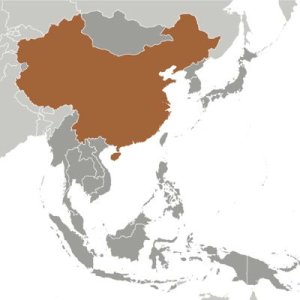
China
429 articles
31 January 2013Out of the blue in the last days Mali has suddenly become the focus of world attention. France has been asked to militarily intervene by Mali’s government to drive Jihadist terrorists out of the large parts of the country they claim. What the conflict in Mali really is about is hardly what we read in the mainstream media. It is about vast untapped mineral and energy resources and a de facto re-colonization of French Africa under the banner of human rights. The real background reads like a John LeCarre thriller.
Vancouver (Canada) | 13 January 2013After decades of covert actions meant to overthrow the communist government of China, in 1989 the CIA launched the first of its so-called "colour" revolutions, which, being unsuccessful, did not achieve a designation of its own, those appellations coming later, in Eastern Europe and Georgia. This action took place in Beijing, where the CIA had trained a coterie of "students" to unseat the government.
Vancouver (Canada) | 7 January 2013In the first part of his study of the low-intensity warfare carried out by the United States against communist China since the Cold War, Robert S. Rodvik focuses on the U.S. collaboration with the nationalist government of Generalissimo Chiang Kai-shek. As a rabid anti-communist, Washington knew it could count on the Generalissimo to be more preoccupied with anti-Communist extermination campaigns than with resisting the Japanese invaders, and complicitly turned a blind eye to Chiang’s massacres and unbridled corruption.
22 November 2012The looming confrontation will be even harsher that the previous ones. U.S. forces have been withdrawing from Europe and disengaging from the Middle East. They are currently clustering around China and developing a ballistic missile shield which - should it actually prove effective some day - would enable Washington to strike Beijing without fear of reprisal.
21 November 2012German-born international consultant Cristof Lehmann followed in detail the recent Chinese Communist Party Congress. In an interview with the Tehran Times, he highlights the convergence of positions on the Syrian crisis between Moscow and Beijing. He expects China to unequivocally support the deployment in early 2013 of a United Nations peacekeeping force mainly composed of CSTO troops.
Report to the Eighteenth National Congress of the Communist Party of China
Hu Jintao’s report at 18th Party Congress
Beijing (China) | 17 November 2012Comrades,
I now wish to deliver the following report to the Eighteenth National Congress of the Communist Party of China on behalf of the Seventeenth Party Central Committee.
The Eighteenth National Congress is one of great importance being held when China has entered the decisive stage of completing the building of a moderately prosperous society in all respects. The underlying theme of the congress is to hold high the great banner of socialism with Chinese characteristics, follow the (...)
Ottawa (Canada) | 7 November 2012The Pentagon is working to encircle Eurasia and to surround the Eurasian Triple Entente composed of China, Russia, and Iran. For every reaction, however, there is a counter-reaction. This Canadian-based sociologist and scholar argues that neither one of these three Eurasian powers will sit idly as passive US targets. Beijing, Moscow, and Tehran are all taking their own distinct counter-measures to oppose the Pentagon’s strategy of military encirclement.
New York (United States) | 27 September 2012Work Together to Achieve Common Security and Development
Mr. President,
I wish to congratulate you on your election as president of the 67th Session of the General Assembly. I am confident that with your ability and experience, you will successfully fulfill this lofty mission. I also wish to thank Mr. Al-Nasser for his positive contribution as president of the last session.
Mr. President,
Ladies and Gentlemen,
The world is undergoing major and profound changes. The trend towards (...)
Shift in Russian-Chinese tectonic plates
Calling the China-Russia split by its right nameby
Melkulangara K. Bhadrakumar
4 September 2012As China and Vietnam lurch increasingly towards crisis, Beijing is not amused at the Kremlin’s refusal to reciprocate over the United States’ "pivot" in the Asia-Pacific, especially since returns from its diplomatic support for Moscow’s embattled ally in Damascus are expected. The symbolism of Russia hosting the Vietnamese president and the Japanese foreign minister in quick succession in July was not lost on China either. Detecting a chill descending on Sino-Russian relations, Ambassador Bhadrakumar throws light on the situation.
Beijing (China) | 31 August 2012In a few moves, Egyptian President Mohamed Morsi has not only managed to tip the balance of power in Egypt and in the Middle East, but also farther afield. His budding partnership with China, as this author argues, could help Morsi shift his foreign policy axis away from the U.S. and the West, while providing China with the opportunity to make inroads into the oil-rich Middle East thereby countering the pressure and stranglehold she is facing from the United States on her own turf. A sticking point between Egypt and China may, however, turn out to be Syria.
25 August 2012Tensions are once again running high between the United States and China as Washington plans to expand its missile system in the Asia-Pacific region.
The Pentagon intends to convince Tokyo to allow the installment of a second early-warning radar system, known as X-Band, in southern Japan, Wall Street Journal reported on Thursday.
The new X-Band is planned to complement one that the US had deployed in northern Japan in 2006. The Philippines is also being considered as the potential site (...)
Frankfurt (Germany) | 23 August 2012With little fanfare Barack Obama late last year announced a "strategic pivot" in US defense policy to focus on the Pacific, bolstered by "Coalition of the willing" Australia. It is all about emerging China as an economic colossus with a mind all its own. The US military has been steadily positioning itself along the strategic sea lanes surrounding China to deal potentially deadly blows to the mainland as well as cutting off its oil corridors to the Middle East and Africa. This author breaks down a situation where the noose tightening around China could generate a major new conflict zone in the not too distant future.
14 August 2012That China’s rise in Africa amounts to neo-colonialism and is resented by Africans is a notion existing primarily in the minds of Western analysts, as educator and author Brendan P. O’Reilly aptly points out. There are stark differences between Beijing’s and Washington’s foreign policies, and nowhere are these more obvious than in Africa: China’s interests are purely economic, while the U.S. remains obsessed with military dominance. In short, while the U.S. bombs and weaponizes, China is pursuing cooperation based on mutual benefits.
Rome (Italy) | 10 August 2012The Western press lashed out against China’s medal-winning athletes at the London Olympics. Without the slightest shred of evidence, it systematically raised suspicions of doping, pointing the finger in particular at the young swimmer Ye Shiwen. Manlio Dinucci reminds us that such anti-Chinese racism has a bitter taste of déjà vu.
Beijing (China) | 20 July 20121. We, the Ministers of Foreign Affairs and Ministers in charge of economic cooperation of the People’s Republic of China and 50 African countries and the Chairperson of the African Union (AU) Commission, met in Beijing from 19 to 20 July 2012 for the Fifth Ministerial Conference of the Forum on China-Africa Cooperation (FOCAC).

2. We express our thanks to H.E. President Hu Jintao of the People’s Republic of China and H.E. President Jacob Gedleyihlekisa Zuma of the Republic of South Africa, (...)
19 July 2012Russia and China have vetoed a United Nations Security Council resolution that threatened Syria with more sanctions.
It was the third time in nine months that Russia and China used their powers as permanent members of the 15-nation council to block resolutions on Syria. There were 11 votes in favor of the resolution. Russia and China voted against it, while South Africa and Pakistan abstained from voting.
British Foreign Secretary William Hague, who drafted the resolution, earlier said (...)
26 June 2012Thailand is soon likely to be on the list of the Asia-Pacific countries where US troops will be based on a permanent basis. Right now, the Pentagon is mulling its return to the U-Tapao Royal Thai Navy Airfield which was a military base for the USAF B-52 bombers during the Vietnam War in the early 1970s to launch airstrikes on Vietnam, Laos and Cambodia.
Located 40 kilometers from the Thai resort of Pattaya, U-Tapao also serves as an international civil airport which mainly receives tourist (...)
20 June 2012The U.S. is currently building the "the most sophisticated warship in history", the DDG 1000 Zumwalt Class destroyer, already dubbed "the invisible silver bullet." This "stealth" destroyer would be able to sail along the coast in shallow waters, and wipe out the enemy by using its highly advanced electromagnetic "railgun", while remaining undetected by the adversary’s radars.
The ship’s characteristics in shallow water would make it particularly suited to the shores and the numerous sea (...)
13 June 2012China’s growing economic role in Venezuela is a direct result of Hugo Chávez’s systematic drive to supplant U.S. influence over his country, a trend that is spreading throughout Latin America. This staggering compendium of Sino-Venezuela co-operation projects, drawn up by Pravda journalist Olivia Kroth, is emblematic of the shift in the center of gravity towards China occurring in a region that Washington has traditionally regarded as its own backyard and which is now hanging the U.S. out to dry.
Frankfurt (Germany) | 23 April 2012The prospect of an unparalleled Eurasian economic boom has been further solidified following recent talks between Turkish and Chinese leaders. The first steps are being constructed with a number of little-publicized rail links envisioned to connect China and parts of Western Europe. It is increasingly clear to all nations concerned, especially China and Russia, that their natural tendency to develop these markets faces only one major hurdle: NATO and the US Pentagon’s Full Spectrum Dominance obsession. According to Engdahl, rail infrastructure is a major geopolitical tool for obviating that obstacle.
Damascus (Syria) | 17 April 2012The media and military attack against Syria is directly related to the global competition for energy, as explained by Professor Imad Shuebi in this masterful article. At a time when the euro area threatens to collapse, where an acute economic crisis has led the U.S. into a debt of up to 14 940 billion, and where their influence is dwindling in the face of the emerging BRICS powers, it becomes clear that the key to economic success and political domination lies mainly in the control of the energy source of the century: gas. It is because she is at the heart of the most colossal gas reserves in the world that Syria is being targeted. The wars of the last century were fought for oil, but a new era has dawned, that of wars for gas.
Rome (Italy) | 27 March 2012Two major pipeline projects are at present vying to secure future energy supplies to Pakistan, India and China. One originates in Iran while the second one draws on reserves in Turkmenistan. The latter is promoted by an Israeli group and is supported by Secretary of State Clinton. According to Dinucci, an attack against Iran could cripple the Iranian project, which is currently ahead of the game. The question remains whether US leaders are still really in line with this strategy, as hinted in recent statements by Secretary of Defense Leon Panetta.
20 March 2012Moscow and Beijing have been firmly opposing intervention in Syria, stressing the need for a diplomatic solution to the crisis. Middle East expert He Wenping says this is matter of principle.
He Wenping, of the Chinese Academy of Social Sciences, insists that Russia and China are defending the principle of state sovereignty. “Any regime change should be undertaken by the people in that country,” she told RT.
In addition to Russia, China is also trying to protect its geopolitical interests (...)
16 March 2012Famously predicted by Zbigniew Brzezinski, the rapprochement between Russia and China can be traced back several years. In this article, first published in 2007, Nazemroaya analyses the successive stages of a historical process consistently driven by the same anti-hegemonic principles that underpinned the two countries’ common stance on Syria at the UNSC. Today, the alliance between the two Eurasian giants is Washington’s worst nightmare come true, of which, ironically, the United States may well be the unintentional architect.
Beijing (China) | 23 February 2012The Chinese veto at the Security Council was not a passing fancy influenced by Russia, but the fruit of a long and painful experience. It was primarily motivated by the desire to uphold the norms of international law. Professor Li Qingsi places this concern in its immediate historical context (regime changes orchestrated in North Africa) and within a longer-term perspective (China’s occupation by the West and the thorny Sino-US relations).
Beijing (China) | 23 February 2012According to Major General Luo Yuan, member of the Academy of Military Sciences of the People’s Republic of China, the US ultimatum to Syria has backfired on Washington. He has urged Moscow and Beijing to join forces to ward off any further imperial expansion by the United States.
8 February 2012The German Chancellor has just completed her fifth trip to China since she took office. During her three-day visit, Angela Merkel was able to meet with President Hu Jintao and Wu Bangguo, current Chairman and Party secretary of the Standing Committee of the National People’s Congress. In addition, she held meetings with Prime Minister Wen Jiabao.
She visited Guangzhou, capital of the southern province of Guangdong, where she attended, together with the Chinese Prime Minister, a trade (...)
DOUBLE VETO BANS IMPERIAL WAR AGAINST SYRIA
The GCC and NATO lose their leadershipby
Thierry Meyssan
Damascus (Syria) | 5 February 2012Contrary to her position at the time of the attack on Iraq, in the case of Syria France failed to defend the principles of international law, rallying instead the imperial camp and its lies. Together with the United Kingdom and the United States, she has suffered a diplomatic defeat of historic proportions, while Russia and China have become the champions of the sovereignty of peoples and peace. The new international balance of power is not only a consequence of the United States’ military decline, it is also a penalty for their falling prestige. Ultimately, Western powers have lost the leadership they enjoyed throughout the twentieth century, having forsaken all legitimacy by betraying their own values.
Most popular

Mackinder’s Geo-Strategic Nightmare